How to Determine Residual Seal Force in Pharmaceutical Vials
Understanding Residual Seal Force: Definition, Testing Equipment, and Best Practices
Written By: Landon Goldfarb
Reviewed By: Meredith Bernstein
Edited By: Nick Erickson
Updated: May 22, 2026
Residual seal force (RSF) is a quantitative measure of the strength and integrity of the seal between a glass vial and its elastomeric closure. This seal is critical for parenteral products such as injectable medications and vaccines, which are commonly packaged in glass vials. Maintaining sufficient residual seal force helps prevent product contamination, leakage, and loss of sterility throughout the product lifecycle.
Glass vials evaluated for residual seal force are used exclusively in healthcare and pharmaceutical applications, where container closure integrity is essential. A clear example of the importance of residual seal force testing is demonstrated by COVID‑19 vaccines. Several vaccines must be stored at ultra‑low temperatures to remain effective. At these temperatures, elastomeric closures can contract, potentially reducing residual seal force and increasing the risk of vial leakage.
Residual seal force testing can be performed across a broad range of temperatures to help manufacturers assess closure materials, vial designs, and assembly processes under realistic storage and transport conditions. This testing provides critical verification that the container closure system can withstand manufacturing, distribution, and long‑term storage — ensuring the product remains safe and effective until administration to the patient.
What is Residual Seal Force?
Residual seal force is the force that the elastomeric seal places on the aluminum cap of the vial. This force is a direct indicator of vial closure security and container closure integrity. Adequate residual seal force helps ensure the vial remains sealed throughout storage, transportation, and use.
A vial seal is formed by compressing a rubber stopper into the vial opening and securing it with an aluminum cap that is crimped with an initial application force. Over time, the residual seal force decreases due to the relaxation behavior of elastomeric materials, gradual force decay from the crimped cap, and the effects of manufacturing, sterilization, and handling processes. Monitoring residual seal force allows manufacturers to better understand how these factors impact long‑term seal performance and product protection.
Optimize Your Testing
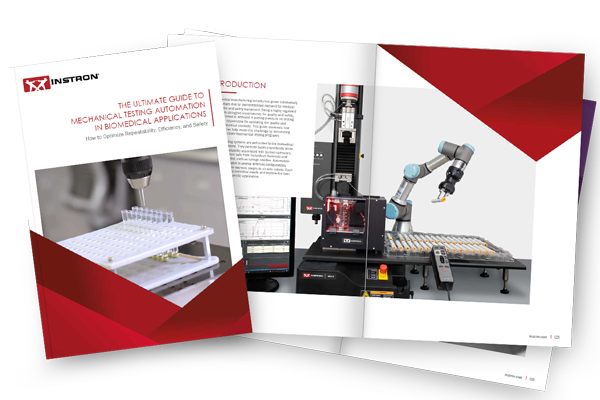
Discover how automation can enhance test repeatability, improve operational efficiency, and support safer testing environments.
Determining the Residual Seal Force
The United States Pharmacopeia (USP) outlines standards for the determination of Container Closure Integrity (CCI), a measure of the ability of a container to prevent leakage through non-destructive means. Many studies have shown a correlation between residual seal force values and the CCI performance of the container, prompting many vial manufacturers to adopt residual seal force testing into their quality program. Residual seal force results can also be correlated to the capping and crimping process, helping manufacturers optimize their cap application settings to maximize CCI.
Recommended Materials Testing Systems and Accessories
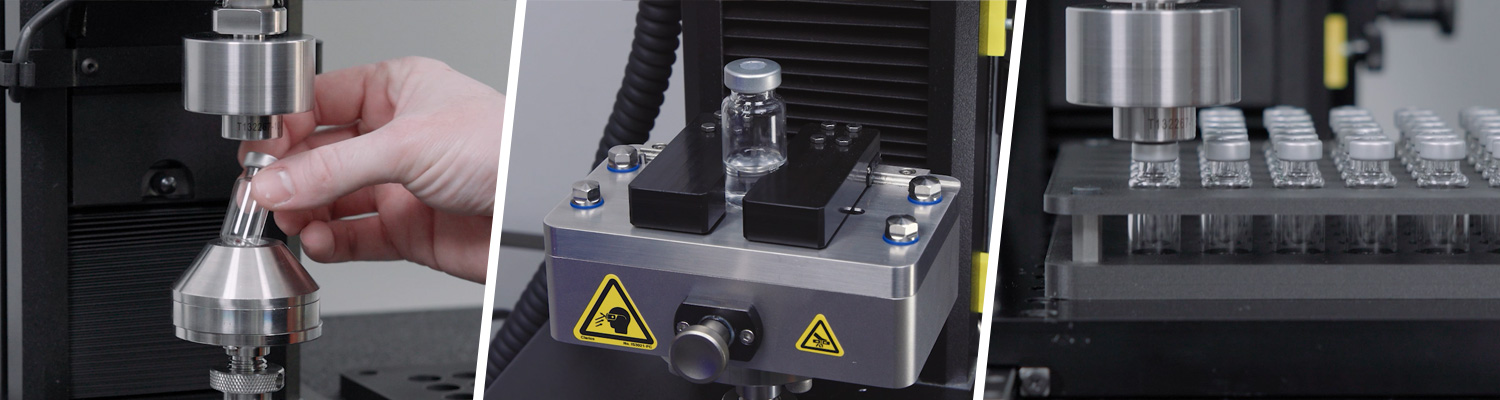
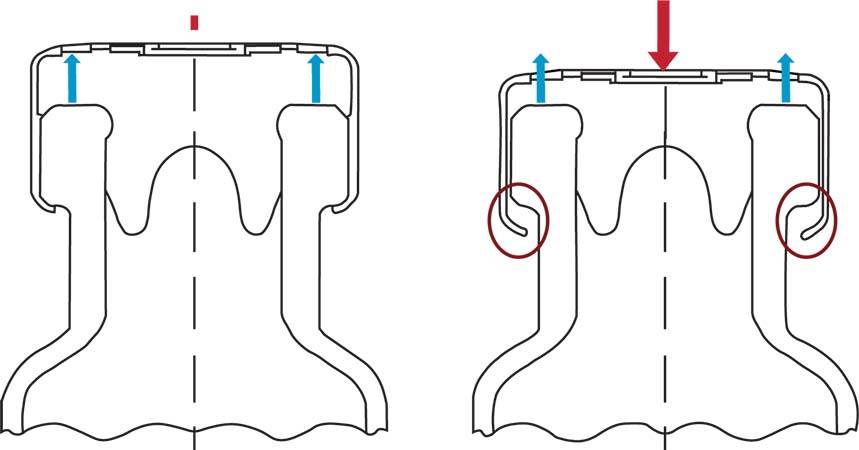
Residual seal force testing can be performed using a low‑force universal testing system, such as an Instron® 68SC‑1, equipped with a 500 N or 1 kN load cell. Instron offers multiple fixtures designed for residual seal force testing, each developed to support different vial formats. One example is the Universal Vial Fixture (catalog number CP140386), which applies a controlled compressive load around the edge of the vial until the lower lip of the aluminum cap breaks away and begins to move in the opposite direction of the applied force.
The upper compression fixture is spherically seated, allowing it to self‑pivot during testing. This self‑aligning design helps maintain near‑perfect alignment between the fixture and the vial, even when the aluminum cap is slightly misaligned, resulting in more accurate and repeatable residual seal force measurements.
Accurate measurement of residual seal force requires test software capable of detecting and analyzing the decline in load associated with the sealing process. Residual seal force values can be calculated using either a manual cursor select or an automatic calculation within Bluehill® Universal software.
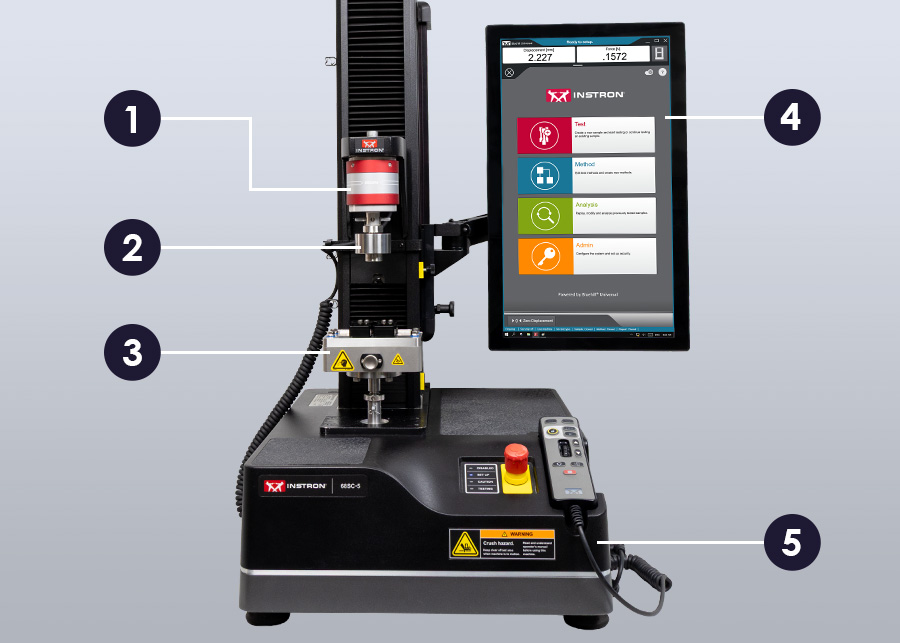
Example System Configuration for Residual Seal Force Testing
- 2580 Series Load Cell
- Upper Vial Fixture - Fixed Size Matches Vial Cap Dimensions
- Universal Vial Fixture (Catalog Number CP140386)
- Bluehill Universal Software with Touchscreen Dashboard
- 6800 Series Single Column Table Top Universal Testing System
Residual Seal Force Testing Equipment for Higher Throughput and Efficiency
Universal Vial Fixture
The Universal Vial Fixture is well suited for laboratories that perform residual seal force testing across multiple vial sizes. Its adjustable design allows different vial formats to be tested using the same fixture, reducing the need to change fixtures when switching vial sizes. The fixture incorporates an automatic centering feature that ensures the vial is consistently positioned relative to the applied compressive load. This centering alignment supports efficient testing workflows and helps produce repeatable residual seal force measurements across different vial sizes.
AT2 Automated XY Stage
The AT2 Automated XY Stage enables batch residual seal force testing of multiple vials by automatically positioning specimens according to a programmed Bluehill® Universal test sequence. Operators can load a tray of specimens, start the test, and allow the system to run unattended, freeing time for other laboratory activities while testing proceeds. This automated positioning supports consistent specimen placement and repeatable residual seal force measurements across multiple samples.
Automated Carousel Testing System
The Automated Carousel Testing System is designed to automate residual seal force testing of medical vials using a compact, bench‑top configuration. Vials are loaded into the carousel and tested sequentially without manual repositioning, allowing automated test execution once the method is initiated. The system’s small footprint allows automation to be added to standard laboratory benches, including environments with limited space. Stainless steel covers and wipe‑down surfaces support use in biomedical and regulated laboratory settings.
Testing Tips and Tricks
- Reducing variability when testing residual seal force can be difficult to control. Since elastomeric vial seals relax in the short term and age in the long term, it is important to make sure that all specimens in a sample are capped at approximately the same time to minimize variability during testing.
- Alignment is critical for repeatable results. Fixturing should help the operator maintain concentricity between the vial and the platen surface, as off-center loading can greatly increase the variability between tests.
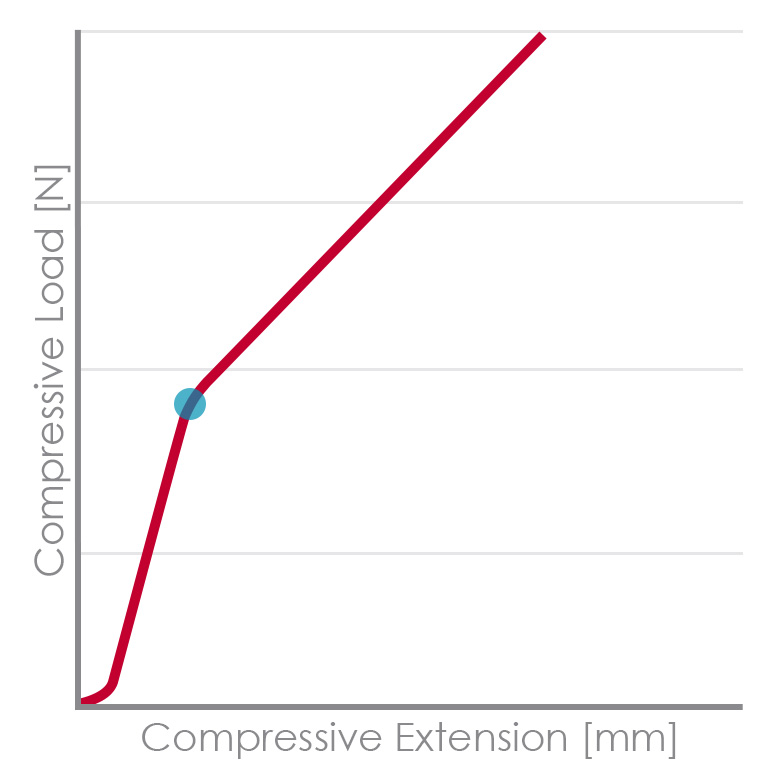
- By placing a compressive load on the vial cap, a clear inflection point will appear in the curve at the point where the RSF point has been surpassed causing separation of the crimped cap from the head of the vial.
- Visit our drug delivery device and container testing section to learn more.
Frequently Asked Questions (FAQs)
Residual seal force is measured as the point at which the compressive load applied by the upper test fixture to the crimped aluminum cap matches and overcomes the upwards internal pressure applied by the sealed vial and rubber stopper.
About the Author

Landon Goldfarb
Landon Goldfarb is Lead Product Manager at Instron, where he oversees the static testing product management team — collaborating closely with customers and engineering to drive customer-backed innovation across Instron's full static testing portfolio. With deep expertise in highly regulated industries, Landon and his team partner with organizations across a wide range of markets to advance their testing programs — from general quality control to advanced R&D — bringing particular depth and experience to pharmaceutical and medical device customers worldwide.
A trusted industry voice, he contributes to standards development and shares actionable insights through technical publications and conference presentations — championing best practices and advancing the science of medical device testing on a global stage.